-
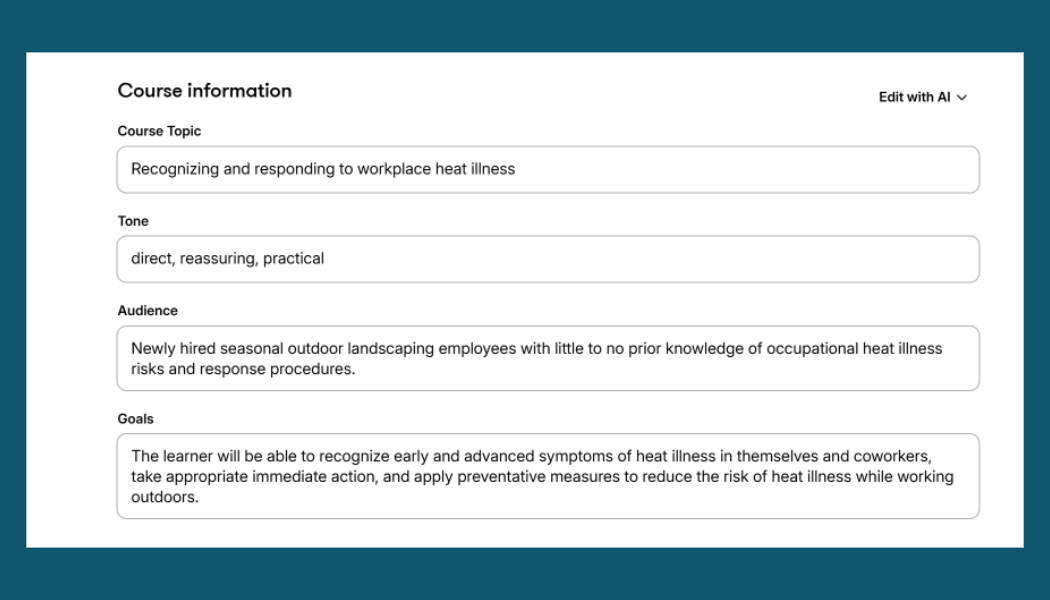
Same Prompt, Different Tools: Articulate Rise
Articulate Rise created an accurate, accessible course, but did its AI make thoughtful instructional design decisions? Here’s what I found in the next round of my Same Prompt, Different Tools experiment.
-

Same Prompt, Different Tools: Genially
Round three of my Same Prompt, Different Tools experiment takes on Genially! This time, AI-generated content meets preexisting templates, questionable instructional design decisions, and accessibility issues I couldn’t fully fix.
-
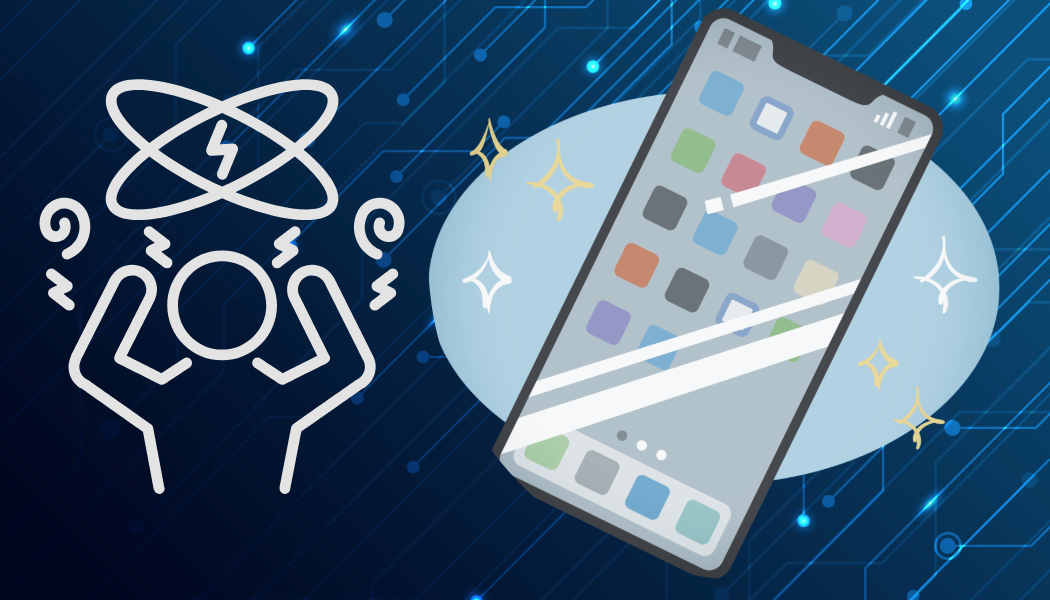
I Avoided Liquid Glass for a Year. I wish I Still Could.
After more than a year of avoiding Liquid Glass, I finally had to update. Here’s what happened when Apple’s new interface met my vestibular disability, and why the accessibility settings weren’t enough.
-

Same Prompt, Different Tools: Claude Design
This time, I gave Claude Design the same learning problem, source material, and basic requirements to see what it would create. I’m looking at the instructional decisions it made, how the course held up to accessibility testing, and what happened when I asked Claude to fix the issues I found.
-

How Do You Write Captions for Music?
Music captions need to do more than indicate that music is playing. This post explores how context shapes what information belongs in a caption, why educational content can be particularly complicated, and how to think through situations when the guidelines don’t provide an obvious answer.
-
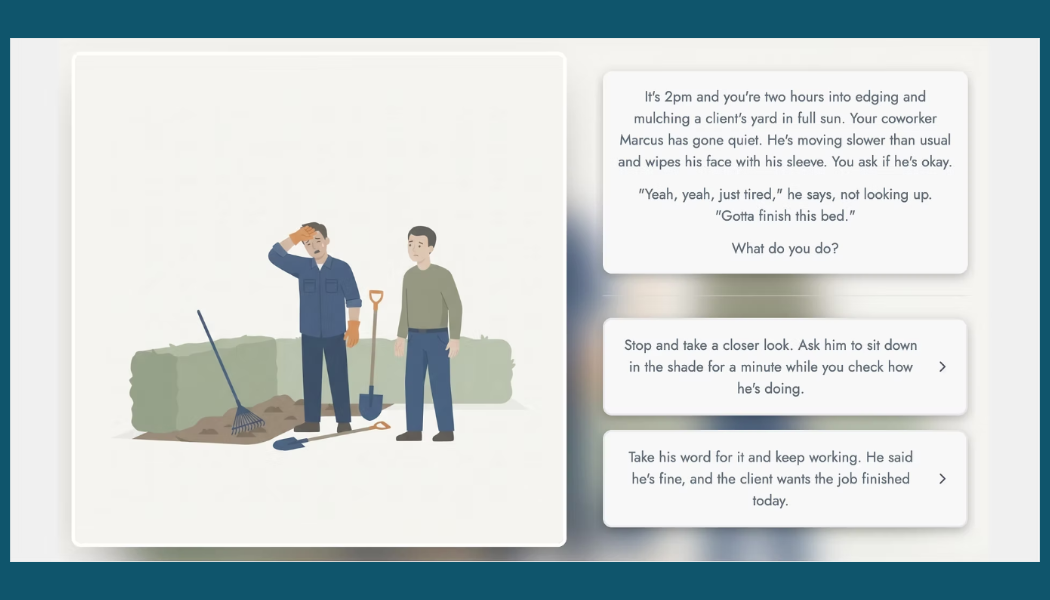
Same Prompt, Different Tools: Mindsmith
What happens when different AI tools start with the same learning problem and source material, but get to make their own design decisions? That’s what I’m exploring in this series, with a close look at both instructional design and accessibility. First up: Mindsmith.
-
Side Quest: Keeping the Challenge in the Dungeon
What happens when an instructional designer becomes a Dungeon Master? Character creation guides and redesigned character sheets. Here’s how I’ve been using accessibility, usability, and learning design to reduce barriers, lower cognitive load, and help new D&D players spend less time searching for information and more time playing the game.
-
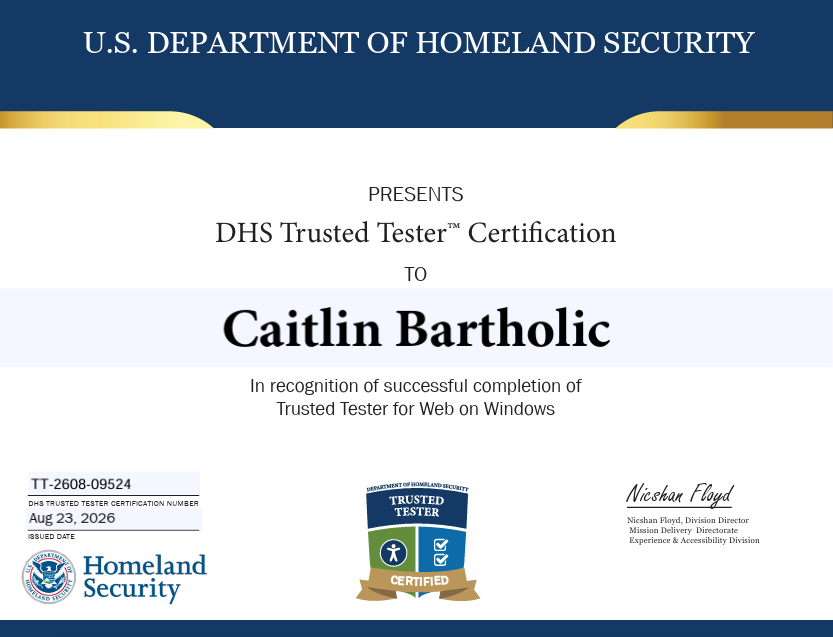
Becoming a Trusted Tester
I earned my Trusted Tester certification, but the experience of getting there gave me almost as much to analyze as the accessibility testing itself. Here’s my take on the training, assessments, learning design, and accessibility of the certification process: what worked, what needs improvement, and what I wish I’d known before I started.
-
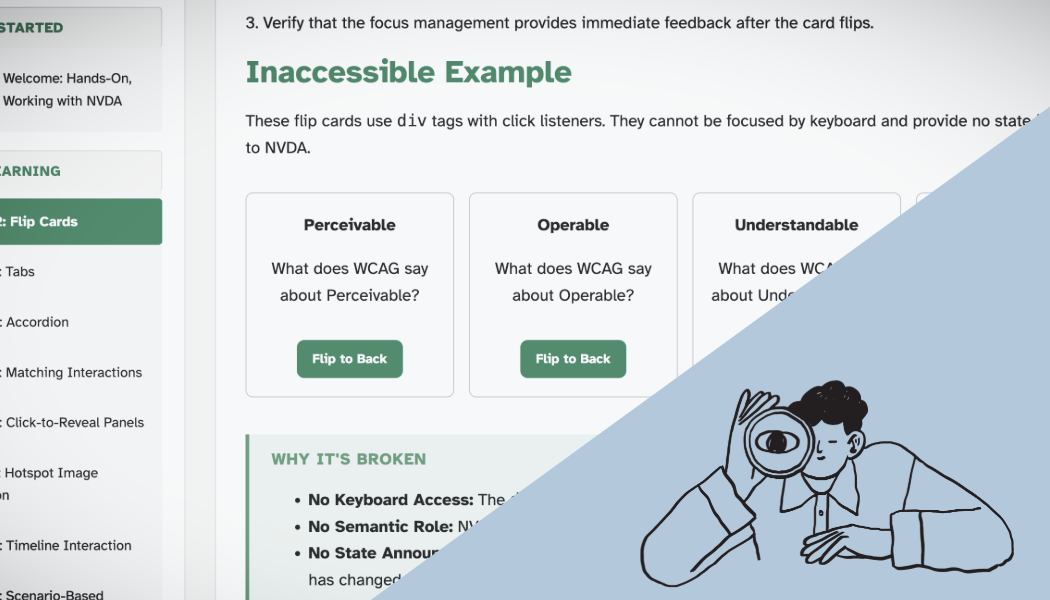
Screen Reader Testing, But No Peeking!
Screen reader testing is one thing. Screen reader testing without looking at the screen? That’s a different experience. I worked through Jacob Wood’s Hands-On, Sight Off: Working with NVDA course to explore accessible and inaccessible examples and dig into the why behind them.
-

Out of the Classroom, Into… Everything Else
After 19 years of teaching orchestra, I left the classroom… and then apparently decided to do everything else. A career change, accessibility work, new certifications, unexpected projects, D&D, and finally a little breathing room. Here’s where I’ve been, what I’ve been up to, and what I’m figuring out next.